

I was fresh out of grad school, working at my first high school as a school counselor, and suicide clusters were on the rise. Teenagers were dying by suicide under the pressure of getting into the perfect college.
Thinking about the next step in life is supposed to be joyful. A time to celebrate and look ahead to a big, bright future. Instead, kids never got the chance to see their futures start.
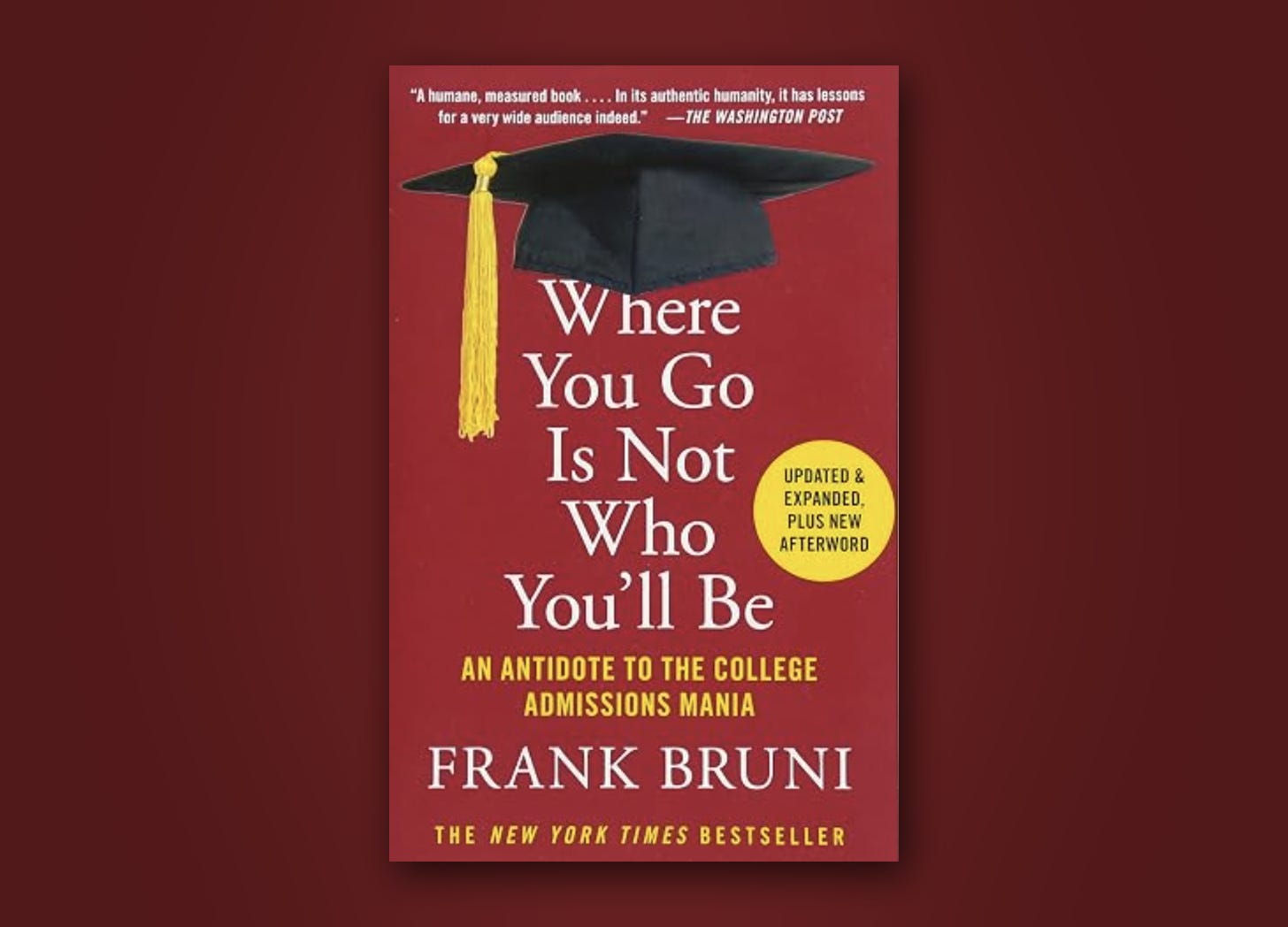
So what did we do? We gathered our entire community together to read NYTimes bestseller Frank Bruni's Where You Go Is Not Who You'll Be.
Its core premise: research shows the name of the college you attend is not the defining factor in your success. The person is.
“There’s a widespread conviction, spoken and unspoken, that the road to riches is trimmed in Ivy and the reins of power held by those who’ve donned Harvard’s crimson, Yale’s blue and Princeton’s orange, not just on their chests but in their souls. No one told that to the Fortune 500. They’re the American corporations with the highest gross revenues. The list is revised yearly. As I write this paragraph in the summer of 2014, the top ten are, in order, Wal-Mart, Exxon Mobil, Chevron, Berkshire Hathaway, Apple, Phillips 66, General Motors, Ford Motor, General Electric and Valero Energy. And here’s the list, in the same order, of schools where their chief executives got their undergraduate degrees: the University of Arkansas; the University of Texas; the University of California, Davis; the University of Nebraska; Auburn; Texas A&M; the General Motors Institute (now called Kettering University); the University of Kansas; Dartmouth College and the University of Missouri–St. Louis. Just one Ivy League school shows up.”
― Frank Bruni, Where You Go Is Not Who You'll Be: An Antidote to the College Admissions Mania
What followed was a shift in culture. Our focus moved from the best school a kid could get into to helping kids figure out who they are.
No single person made that happen. The whole school community had to agree that fit mattered more than the sticker on the back window. A good counselor can't change how selective a school is, but can change the question a student gets asked.
At our school, we moved from 'Where are you applying?' to 'What do you want your college years to give you?'
Name-brand schools still top most kids' lists, and that makes sense. It's mostly an exercise in brand awareness.
But this "Yale or Jail" mentality was costing kids their lives, and I've been on a mission to change it ever since.
Who was the counselor or teacher who helped you see your own fit?